
If you’re traveling across the globe to Ghana, you’ve got to check out Kumasi, home to the Ashanti Kingdom. It’s where you’ll learn about Kente cloth and Adinkra symbols such as Sankofa.
The kingdom has ruled the area for centuries and it has a rich and fascinating history. I’m so glad Ashanti African Tours decided to partner with me on this trip and dedicated two days of my itinerary to visiting here.


Here are the top five places to visit near Kumasi.
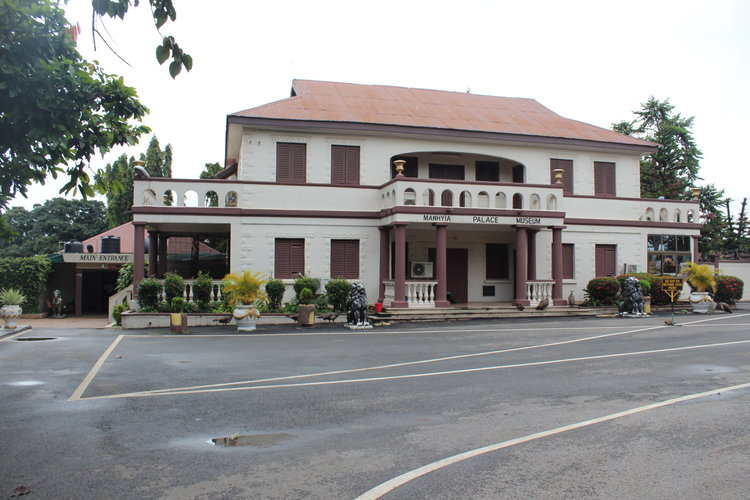
1. The Manhyia Palace

The Manhyia Palace is the hub of the Ashanti, the kingdom of gold. It’s where their King conducts business.
There’s a museum on the property dedicated to the Kingdom’s history. There you will learn from the tour guides about the Kings and Queens of the past and present, their role in global diplomacy, and how to act around them. I learned that the King is their political and spiritual leader. Beneath him are chiefs which rule over each village. The Queen has the final say on who will be King. The King and Queen aren’t married; they’re often related, usually mother and son or siblings and they serve until death. They do not allow you to take pictures inside the palace.
The importance of the stools
What I found interesting is the power of stools. They symbolize authority and without them, the chiefs and kings can not rule their land. The king possesses a golden stool. You’ll see these stools at many other important historical sites around Ghana.
How to communicate with the King
During your palace tour, you’ll learn the King has a linguist. Anyone who wishes to speak to the King must go through the linguist who sits in front of the King during meetings. Also, the person must lower their traditional clothing off of their shoulders as a sign of respect for the King when speaking to them.
Also, I learned the Ashanti are also called the Asante. Both refer to the same kingdom.
National Cultural Center
If you can’t make it to the palace, the National Cultural Center also has the Prempeh II Jubilee Museum, where guides will give you a shorter version of the history. They also have on display several ancient artifacts including the stools. No pictures are allowed inside here either. My favorite part about the cultural center were the souvenirs sold nearby at the craft market. That’s where I bought my paintings.
2. Adanwomase
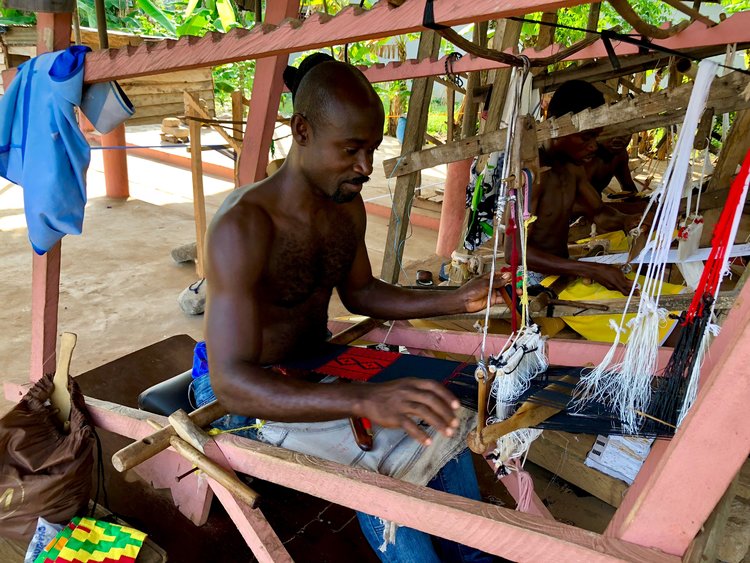
This is the birthplace of Ghana’s colorful Kente cloth. This is where it’s made. The weavers will also explain the meaning of the patterns. It is a very tedious process. The authentic kente cloth is hand-woven by men using wooden devices. If you want to buy kente cloth, this is the best place. But again it’s not cheap because the process is so intricate. It’s also a heavy material.

Watch here as I try to make Kente cloth and hear from the people who make it.
Here you’ll also learn about the importance of cocoa. Ghana is one of the few producers in the world of cocoa. Its beans are used to make chocolate and also cocoa butter. You’ll get to taste the outside of the seeds and learn about the process of turning it into chocolate.
3. Ntonso
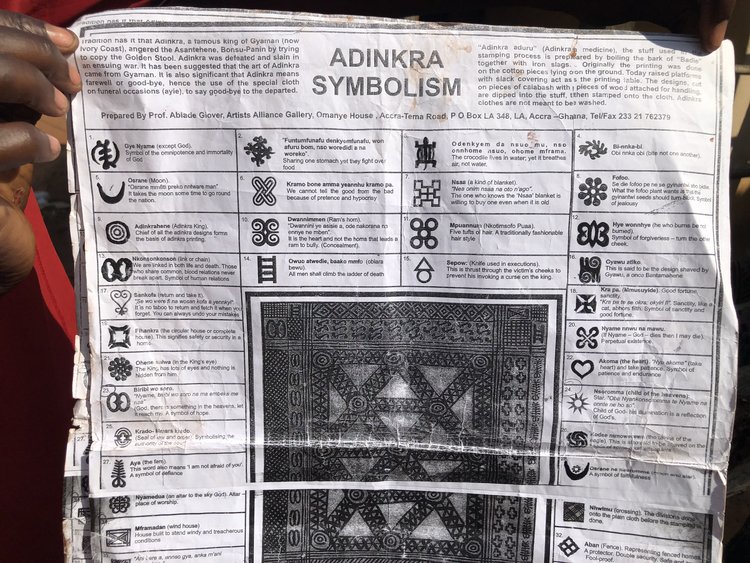
Ntonso is where the Adinkra cloth and symbols originate. Let me back up. I’m sure you’ve heard of the word Sankofa, which literally means “go back and get it” but has metaphorically been used in the African Diaspora to symbolize retracing your roots and returning to what you’ve forgotten. That is one of the many Adinkra symbols.
Watch this video to learn more about the symbols and see me making my own Adinkra cloth.
The people in this village make their own dye from tree bark and then dip stamps of Adinkra symbols into the dye and put them on traditional cloth. Adinkra cloth has been worn by the Ashantis for centuries and pre-dates Kente cloth. Today it’s worn during funerals, festivals, and other important events. It also appeared to be a very time consuming and tedious production so the souvenirs there weren’t cheap. They make blankets, table cloths, bed spreads, table runners, cloths, etc.
Watch this video to learn more about the process.
4. Kejetia Market
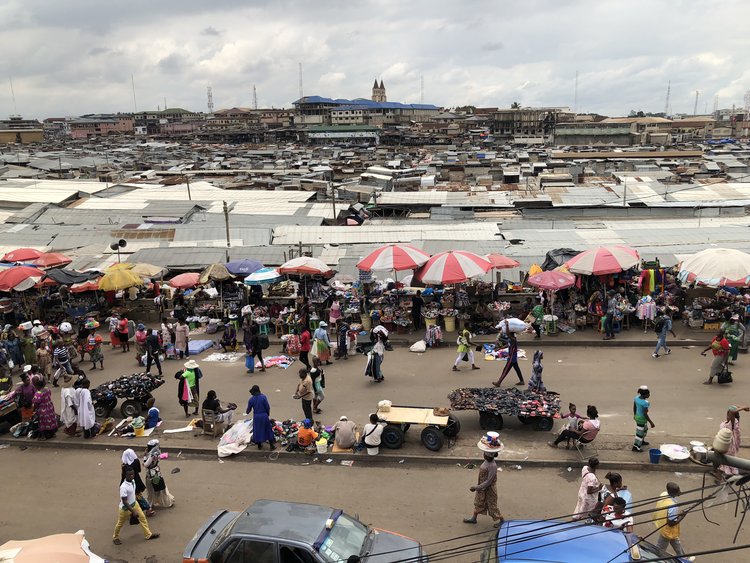
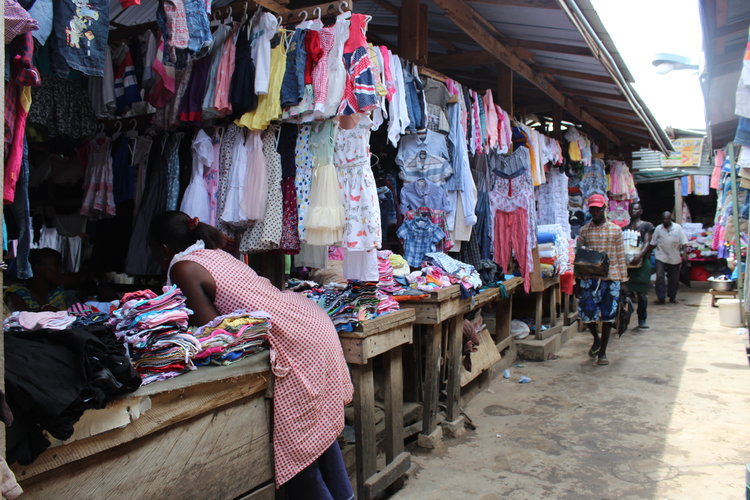
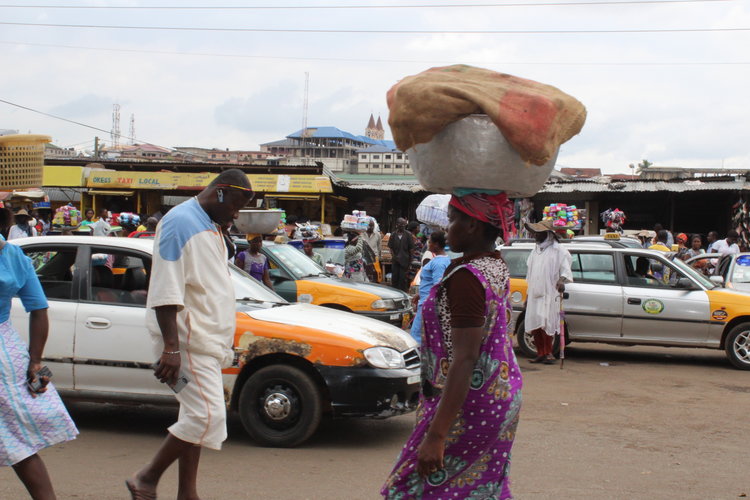
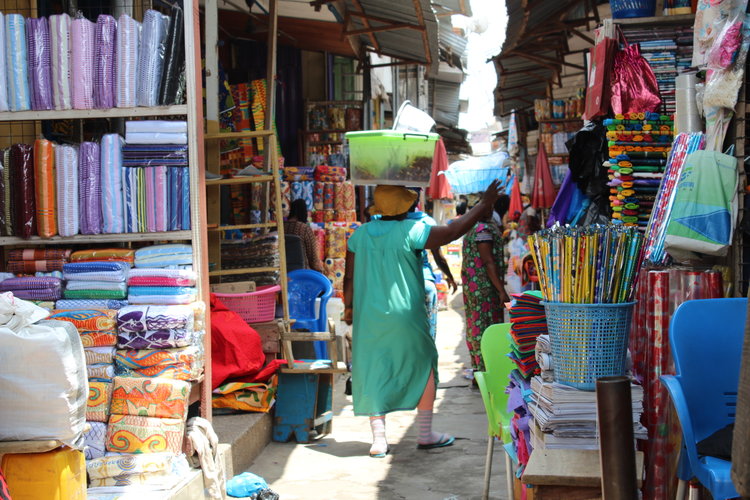
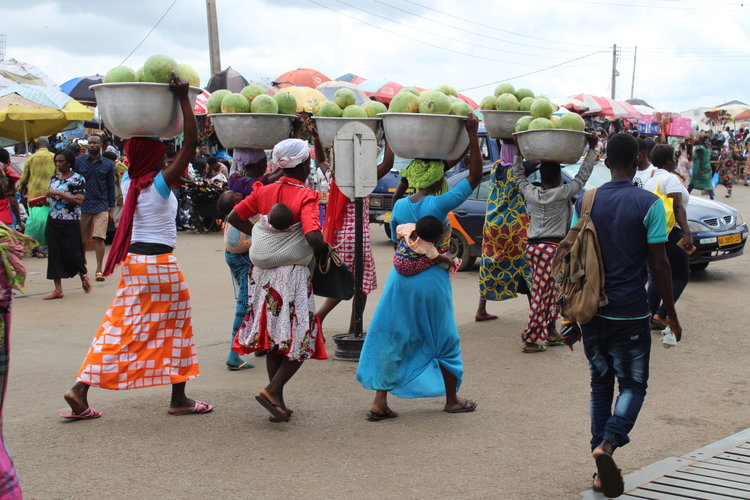
This is reported to be the largest outdoor market in West Africa. It’s a great place to observe everyday Ghanaian life in Kumasi. It appeared that many Ghanaians in Kumasi preferred to do their shopping at the market instead of at the supermarket or malls. There’s thousands of people at this market and 10,000 stores/stalls here. It was overwhelming and I could’ve been there all day taking pictures of the activity going on. People were there making and selling sandals, and sewing and selling kente cloth. Everything from fruit to meat to vegetables and second hand clothes was for sale. It seemed like everybody who was shopping was in a rush to get what they needed. Women roamed about quickly with containers on their heads, buying everything they needed for the next couple of days. There was no room for shopping carts. Shopping at the market seemed like an integral part of Ghanaian life. Second hand clothes were a big deal. Apparently the sellers get the clothes from thrift stores overseas and sell them in the markets. You’ll see shoppers sorting through them looking for good deals. Since Ghana has a sizable Muslim population, you’ll also hear the afternoon prayer on loud speakers.
Kumasi put into perspective the history of Ghana and its global impact. From gold to cocoa, the country has tremendous valuable natural resources that the world would be lost without. The city is definitely worth a visit and I’m so glad Ashanti African Tours included it in my trip itinerary.
Tell me , what do you want to know about the Ashanti Kingdom and Kumasi?